
Kōkā: a meditation on grief and belonging
by Alina Ivanova
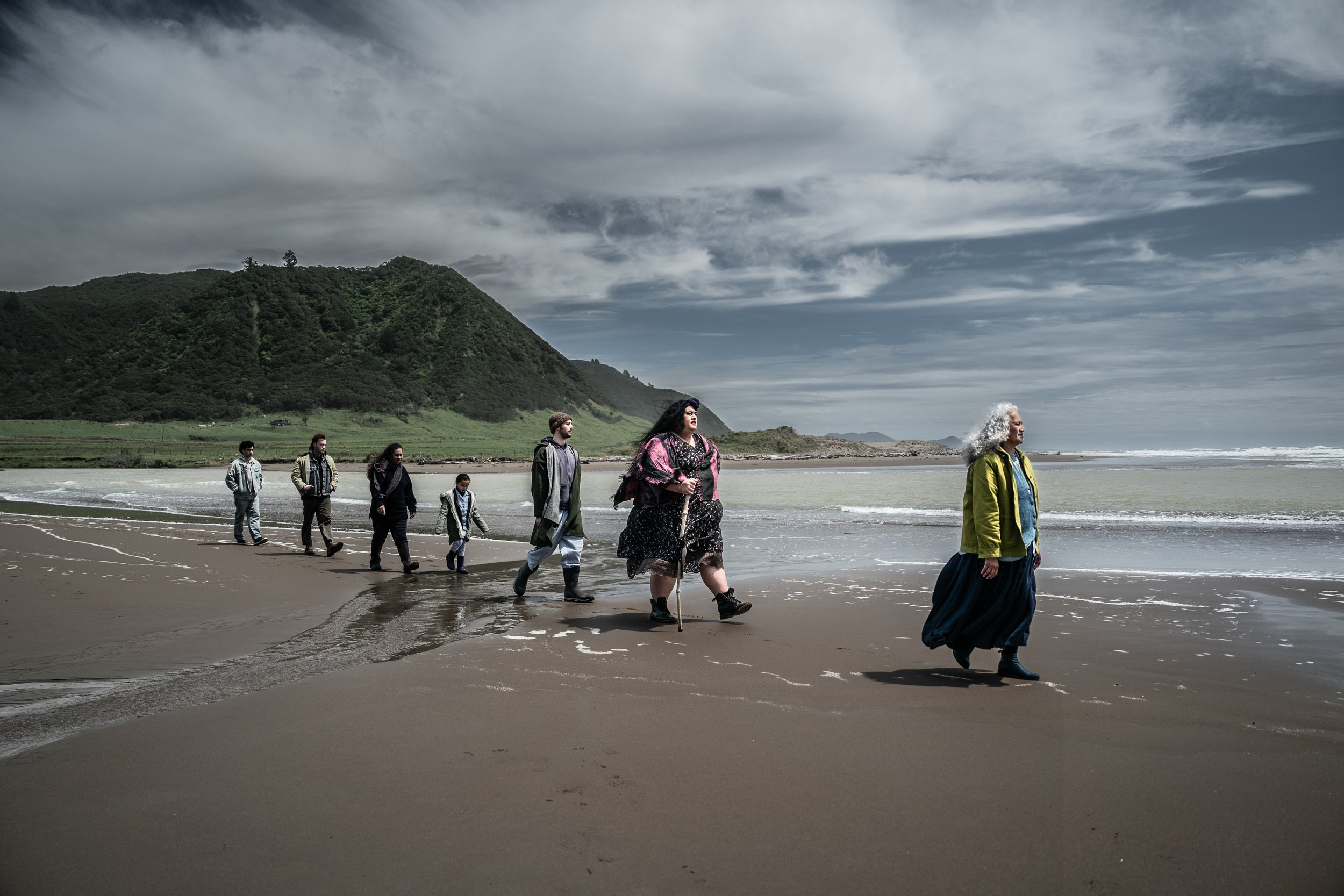
Kōkā (Kath Akuhata-Brown, 2025)
The grey waters of the ocean foam over black sand. On the East coast of Aotearoa’s North Island stands Māori kuia elder, Hamo (Hinetu Dell). The sky above her is night, but it is not dark. Stars rise over the horizon, significant in their light and knowing of Hamo’s return to her whenua (land).
Kath Akuhata-Brown’s Kōkā (2025) heals and calms the soul in a contemporary world that is loud, violent and discordant. Celestially guided by Matariki, Hamo journeys to her whenua, driving in an old Ford Falcon with the wilful and young Jo (Darneen Christian) by her side. It is through their conversations and the moments beyond the paved roads, surrounded by mountains, rivers and lakes, that the film’s layers of language and truth are shown.
Ever-present is water – the sound of rainfall, heavy mists and flakes of snow. Water lies in shed blood, collects and flows from the eyes, forms river currents and pools into lakes. The storytelling of Hamo’s return follows the movements of water. It is stagnant when Jo delays the journey, it is tranquil when they sing together along the road. Water also serves as a gentle backdrop, a cocoon that is safe and hushed, for painful memories to be recounted. In a scene where it is raining, with the Falcon stranded on an isolated road, Hamo expresses grief for her sister, and Jo asks her name. Names are powerful in this film. They hold ancestry and spiritual significance. It is through the name Hana, Hamo’s sister, that there is a glimpse of Akuhata-Brown’s world view. The film centralises Māori teachings on one’s spirit, the connection to nature, and how cultural practices can be remedies to grief. Akuhata-Brown reclaims space for indigenous storytelling, and it is a perspective that as a non-Māori viewer I felt privileged to see translated into cinema.
With the resounding crescendo of Arli Liberman’s compositions, Kōkā becomes a meditation. Thrumming fills the air as clouds gather and stretch across an endless sky. Some wide shots of horizons and dark green forests are so vast the cinema frame feels confining. When the reverberating score and forest landscape coalesce, they anchor you to reflect, to breathe, and by doing so introduce a Māori philosophy of living. You are brought to question the purpose of the incessant rush and restlessness of modern society. Conversation, slowing down, and human feeling are needed for a person – and the world – to be reconciled. Akuhata-Brown shows this through leaving the landscape to speak for itself. The hot pools, nestled in the foothills of mountain forest, are where Hamo and Jo find rest and pause. There is lightness and humour in how their generations differ when Hamo shares her knowledge. But there is also transformation. Jo expresses what Hamo holds back, and Hamo creates another home for Jo to belong to.
As the first feature film to use the original dialect of East Cape iwi Ngāti Porou, each word spoken reclaims Māori knowledge and identity. Sustained by this warmth of connection to Country and to community, Kōkā does not flinch in its truth telling. It reveals the injustice anchored in New Zealand’s legal systems, the racism against Māori people, the acts of police brutality done with impunity, and the lack of support for young people who lose their childhoods to homelessness and escape through drugs. The physical and emotional labour of simply surviving is driven by Christian’s performance as Jo. At a pub, there’s the tough, cheeky persona; in the car, there’s care and vulnerability whilst sleeping and arranging blankets. The film contemplates how in a world that is always changing, identity is unstable. In this instability, Jo seeks comfort and security, Hamo journeys home. We as well, in the cinema, rushed and fatigued and lost in a chaotic age, make our own journey.
Akuhata-Brown’s Kōkā is not a film to be ‘understood’, nor one to be framed and boxed in by Western logic. The fabric of its storytelling is bound by feeling. In a drought of human connection and belonging, there is a life bringing power in this film.
With tears by Kōkā’s end, we all return to water.