
Lesbian Space Princess: An intergaylactic celebration
By Nadia Lazich Harari
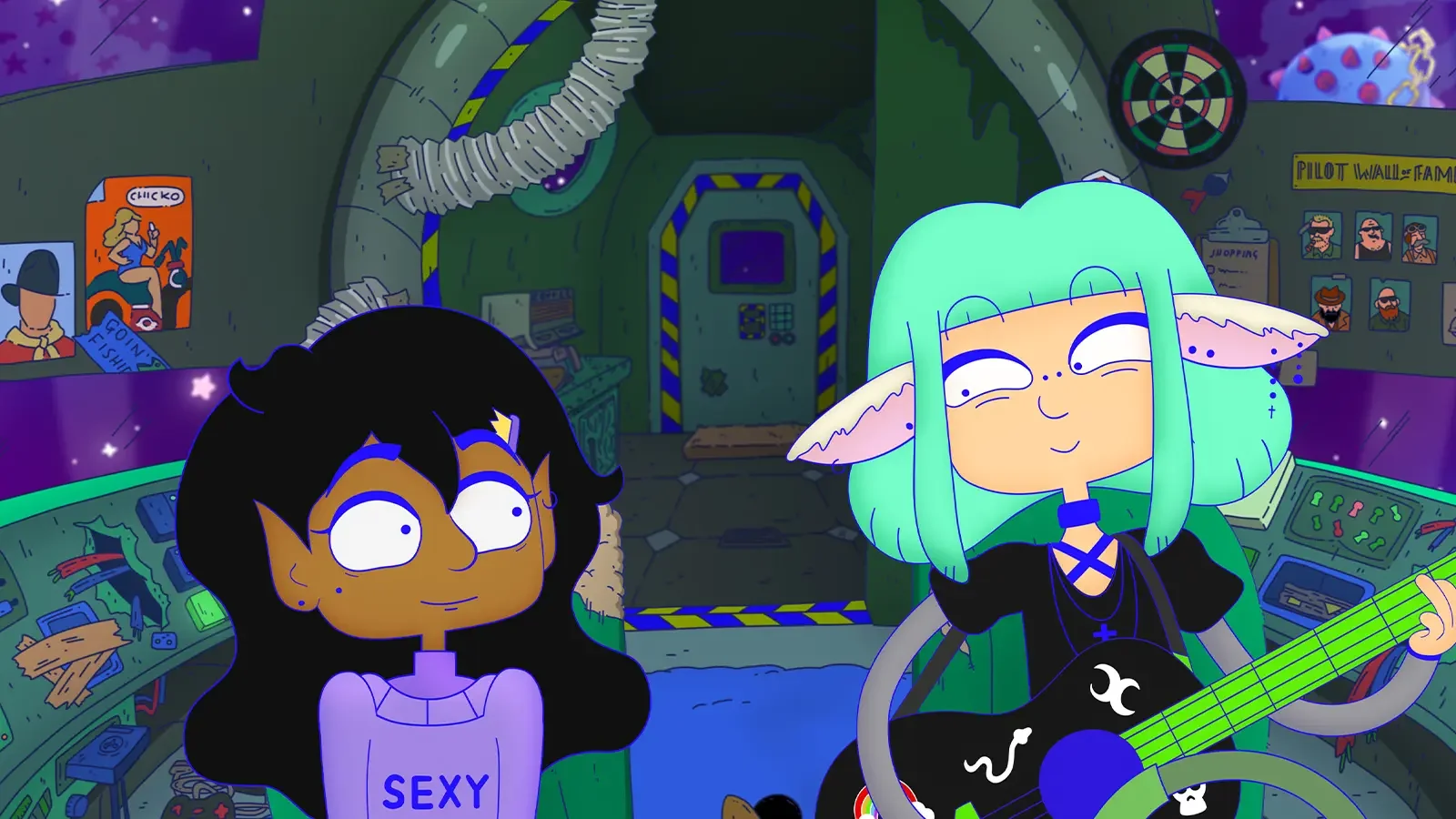
Lesbian Space Princess (2025, Emma Hough Hobbs & Leela Varghese)
As directors Emma Hough Hobbs and Leela Varghese end the speeches at the opening night of the 2026 Melbourne Women in Film Festival (MWFF), they sneak glances at each other filled with love—and I mean, love-heart-eyed emoji sort of love. Introducing their animated feature film, Lesbian Space Princess (2024), they speak to the packed cinema, telling us to “[come] together against racism, transphobia and genocide” and to “rule the gay-laxy.” These are the two directors of a hilarious, smart and incredible feature, who are making the audience laugh and inspiring us with their words. However, they stand under the stage lights with an awkwardly endearing sensibility. It is a candour that we soon see reflected in their main protagonist, Princess Saira (Shabana Azeez). Forced on a journey of self-discovery, Saira is thrust out of her comfort zone—far away from Gay Space—as she voyages to save her ex-girlfriend Kiki the Destroyer (Bernie Van Tiel) from kidnappers, the Straight White Maliens (Mark Samual Bonanno, Zachary Ruane and Broden Kelly, of Aunty Donna fame).
The art style of Lesbian Space Princess is a memorable component of the film. The colourful choices not only emphasise an original style, but completely capture the quirky, weird, galactic chaos of a world that has been built. Using my favourite shade of blue in the outlines and expressive features of the characters, it wasn’t so hard to win me over, as I sat there with a large smile on my face. This aesthetic allows the filmmakers another way to play with the humour in this film. Every scene has small details in the background, waiting to be noticed by the audience. The Live, Laugh, Lesbian poster in Saira’s bedroom, for example, or the Chiko Roll poster decorating the interior of the Problematic Ship (voiced by Richard Roxburgh), who later proudly wears he/him pronouns. This visual approach is instantly introduced during the films’ opening scrapbook exposition, drawing us in as an audience to Saira and Kiki’s relationship... or lack of. The visual stylings are further supported with the use of original songs throughout the film. Each lyric adds extra commentary on what is happening in the scene—for example, when Saira is sad, the lyrics are “really, really sad, sad, sad, sad” during a Twilight referenced montage. The film excels in these moments, which are sometimes ridiculous, at times deadpan, but overall, contribute to a sense of campy satire.
The characters of the Straight White Maliens also introduced a commentary on the broader themes of masculinity within our society. The only point that these conversations felt jarring to me was the use of the penis as an evil image—as the protector of the Maliens and harm-doer towards the lesbians. I felt as though this shifted the social focus onto one that was biological, which was unexpected from a film that is otherwise so conscious in their choices.
As Hough Hobbs introduced the film, she told the audience to “reach for the stars and don’t be afraid to take up space”. Thinking back on its theatrical release in 2025, it was amazing to see the posters scattered around Naarm/Melbourne with the word lesbian in all caps and rainbow font. This film is unafraid and bold, much like the queer community it represents..
It’s also important to note the intentionality of the team behind MWFF to pick Lesbian Space Princess as their opening night film, especially for the tenth-year anniversary of the festival. This reflects the shared values across both the film and the festival, how they together aim to champion and recognise women and gender diverse people in the arts. It is also due to care, hard work and community that we were able to sit in the cinema last night, to reap the benefits of this sort of dedication required to make either of these possible. Before, during and after the screening of Lesbian Space Princess, this celebration was felt by all in attendance.