
MWFF Critics Lab 2026: Short Films, Short Form
The first writing assignment in the MWFF Critics Lab is the capsule review challenge. Our cohort of emerging critics are given the task of writing a 200-word review of a short film, capturing the essence of the film and their perspective in a short-form piece.
The Oldest Heart reviewed by Nadia Lazich Harari
Blue lights, smoke, audience cheers and rock-n-roll music. A few jabs of the boxing gloves and a nervous look to the camera.
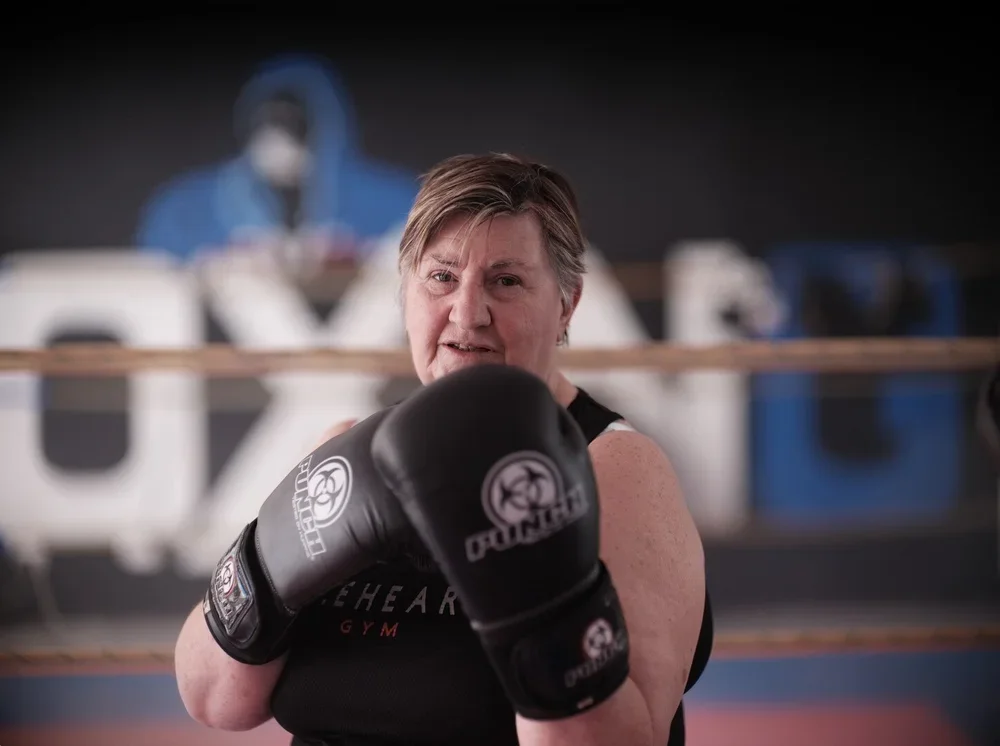
The Oldest Heart (Jessica Sherlock, 2024)
Jessica Sherlock’s The Oldest Heart (2024) introduces Lyn Joy Mills, a woman who has fought many battles. From not being allowed to play sports in 1960s Australia, to overcoming a forced belief of failure, Mills’s motivation is infectious. She is charismatic, sitting in front of the camera in her boxing fit with a wide smile. At 71-years-old,Mills trains alongside young, shirtless, mullet-wearing men. She looks directly at the camera and tells us: “I’m getting in this ring and I can do this.” Mills has been training for her first bout. Through interviews, we meet Mills’s family and boxing coach, all who radiate with delight when given the chance to talk about her—with Joy as her middle name, this is unsurprising. Sherlock places the audience from the gym to each home by using stabilising shots cut with handheld footage, which mimic Mills’s own punches. When the wide shot of the boxing ring fills the screen, there’s a shift, it’s quieter. We are suddenly in unfamiliar territory, counting down to the moment of Mills’s first fight... waiting.
Womb reviewed by Montana May
In the desolate night, a mare gives birth, only to see her foal be taken by pale human arms.
This evocative opening scene establishes a poignant allegory for the forced displacement of Māori children at the hands of Western colonial systems. Ira Hetaraka's Womb (2024) portrays a viscerally haunting tale of memory, powerlessness, and the imperishable love between mother and daughter in the face of prejudice.
Mira (Poutama Heteraka), a young Māori girl, is separated from her mother to assimilate into the home of a Western foster family. The ‘home’ in question is a gauche mansion, adorned with white Roman pillars, gilded frames, and a manicured English garden. Hetaraka’s use of liminal horror motifs further aids the narrative of Mira’s subjugation, revealing how the white picket fence conceals the brutality underlying British polite society. The film’s use of sterile, muted lighting encapsulates the dull monotony of Mira’s routine, sharply emphasising the warmth emitted from the weekly visitations with her mother; poetically underscoring the cultural alienation that she experiences.
From the attention to visual style to formidable thematic messaging, this brilliant film transcends its runtime, delivering a profoundly moving work that lingers in your thoughts for days beyond its viewing.
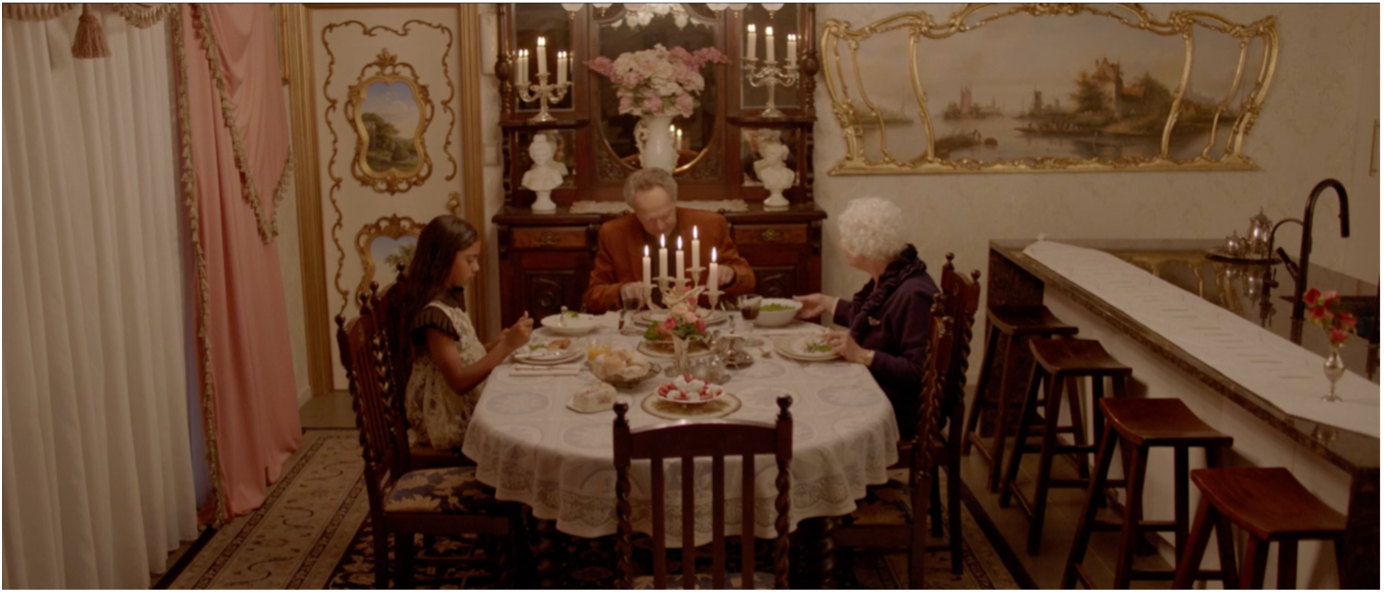
Womb (Ira Hetaraka, 2024)
The Open Cup reviewed by Alina Ivanova
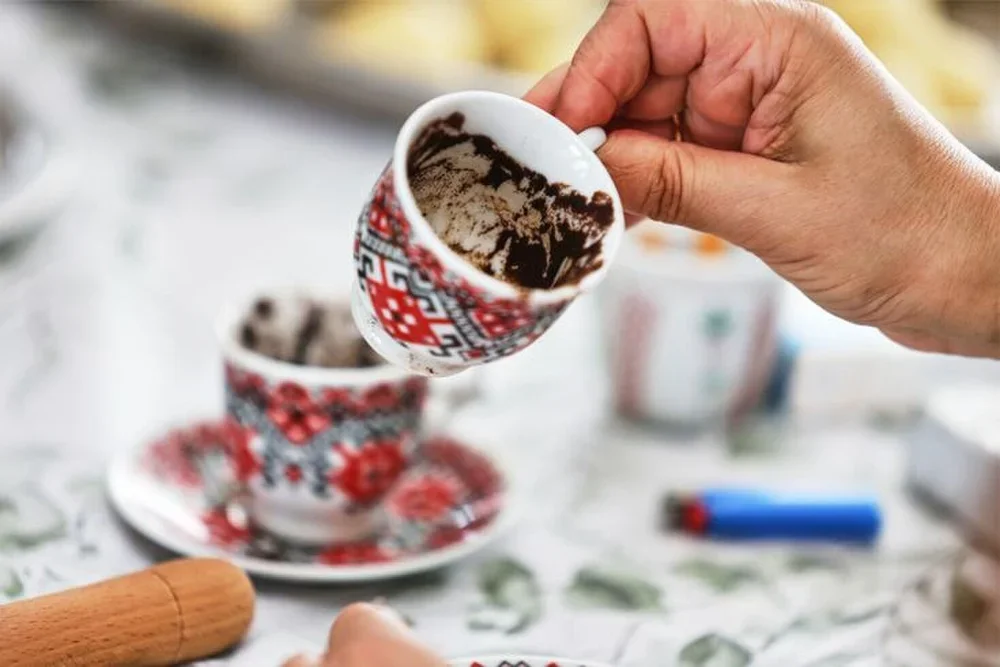
The Open Cup (Amal Awad, 2025)
With every sip of coffee, Amal Awad’s The Open Cup (2025) reveals the familial history surrounding mother and daughter, Haleema (Sivine Tabbouch) and Sana (Safia Arain), as Sana’s sister’s wedding approaches.
Awad translates tradition and culture to the screen in details: the soft tablecloth, the practiced hands of Haleema as she prepares sweets, and the painted reds of the coffee pot. These notes of home shape the universal scene of cooking around the table. All the while, unassuming as family and friends drink coffee, Sana’s empty cup sits with a secret.
By code-switching between Arabic and English, Awad’s writing bridges the eastern and western worlds through the conversations from one end of the table to the other. Sana desires to live a better life than her mother in Australia; Haleema must preserve the family honour. Every passing comment is loaded; each intonation holds tension. And yet, there is always warmth.
I was reminded of my own household, of the spices and routine folding of leaves around rice, of the playful way I would read the tea leaves with my mum. There is a remedying power in acceptance between mother and daughter, and Awad brings that humanity in this film.
Lemons reviewed by Gisele Bruce
Can humans only bond with living bodies? In Lemons (India Fremaux, 2024), absence seems to be a space for reconnection, in full splendour.
Te Ao o Hinepehinga (Chief of War) plays a woman living with the idea of a mother she didn’t know. She commands restraint, humour and deliberate tenderness in a tale of legacy, honour and self-discovery.
Filmmakers India and Caitlin Fremaux reassert themselves as distinctive voices in Indigenous storytelling. Their relentless commitment to urban Māori narratives is invigorating, and their study of internal states over spectacle is flawless.
The film thrives on strategic peaks: from Matthew Chamberlain’s remarks as the matter-of-fact uncle, to the cinematography, production design and sound.
As the story kicks in, we enter a world that makes no sense—where feeding on contradictions is the ground-breaking act. At the end, we find the light in the marvelous Brigit Kelly: the person who never asks for anything until they ask the right question.
The short was made in association with Day One Shorts, NZ On Air, Te Māngai Paho, Whakaata Māori & RNZ.
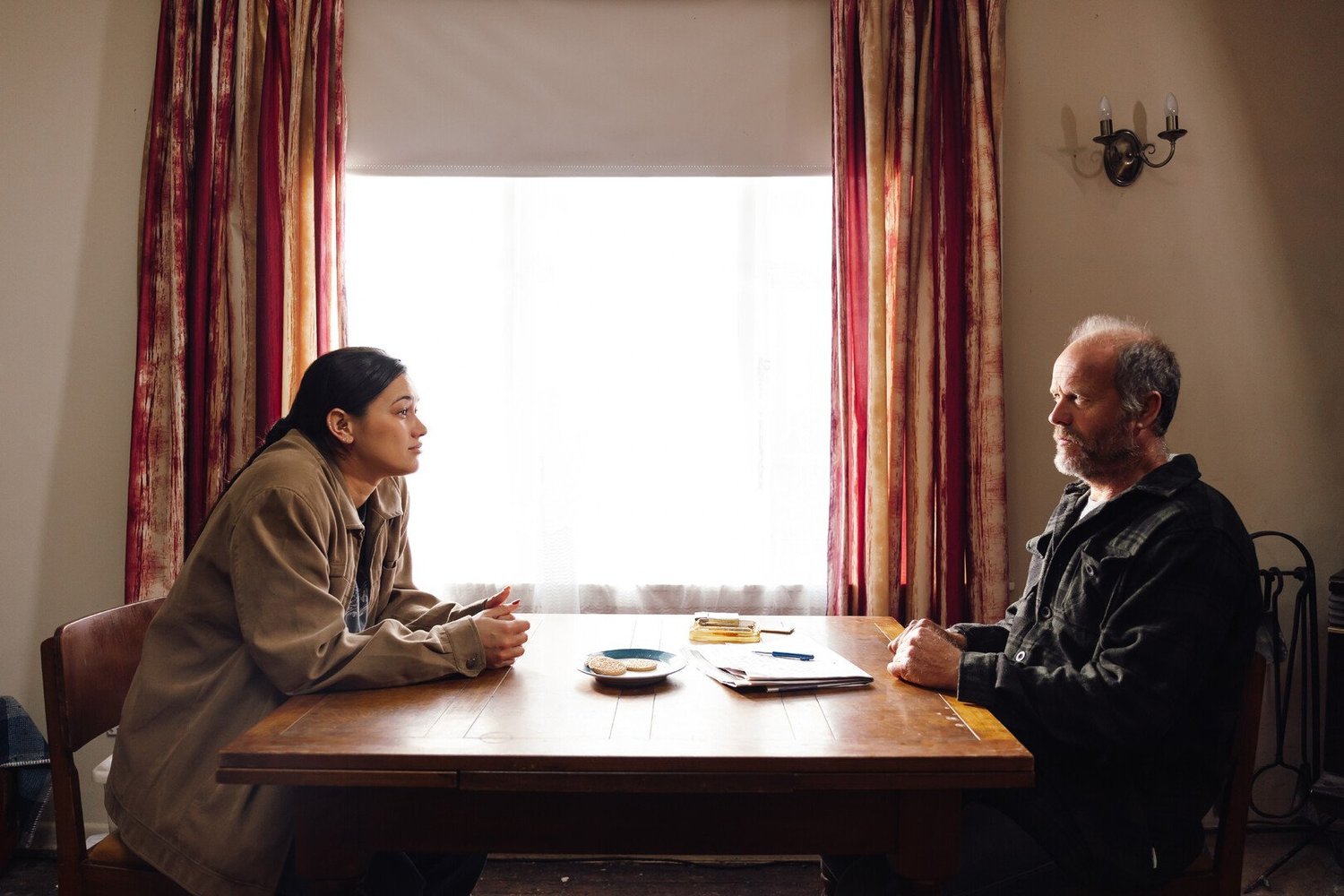
Lemons (India Fremaux, 2024)