
The end is nigh! Interview with Strangers (2025) Director Francesca Emily Mackenzie
By Alina Ivanova
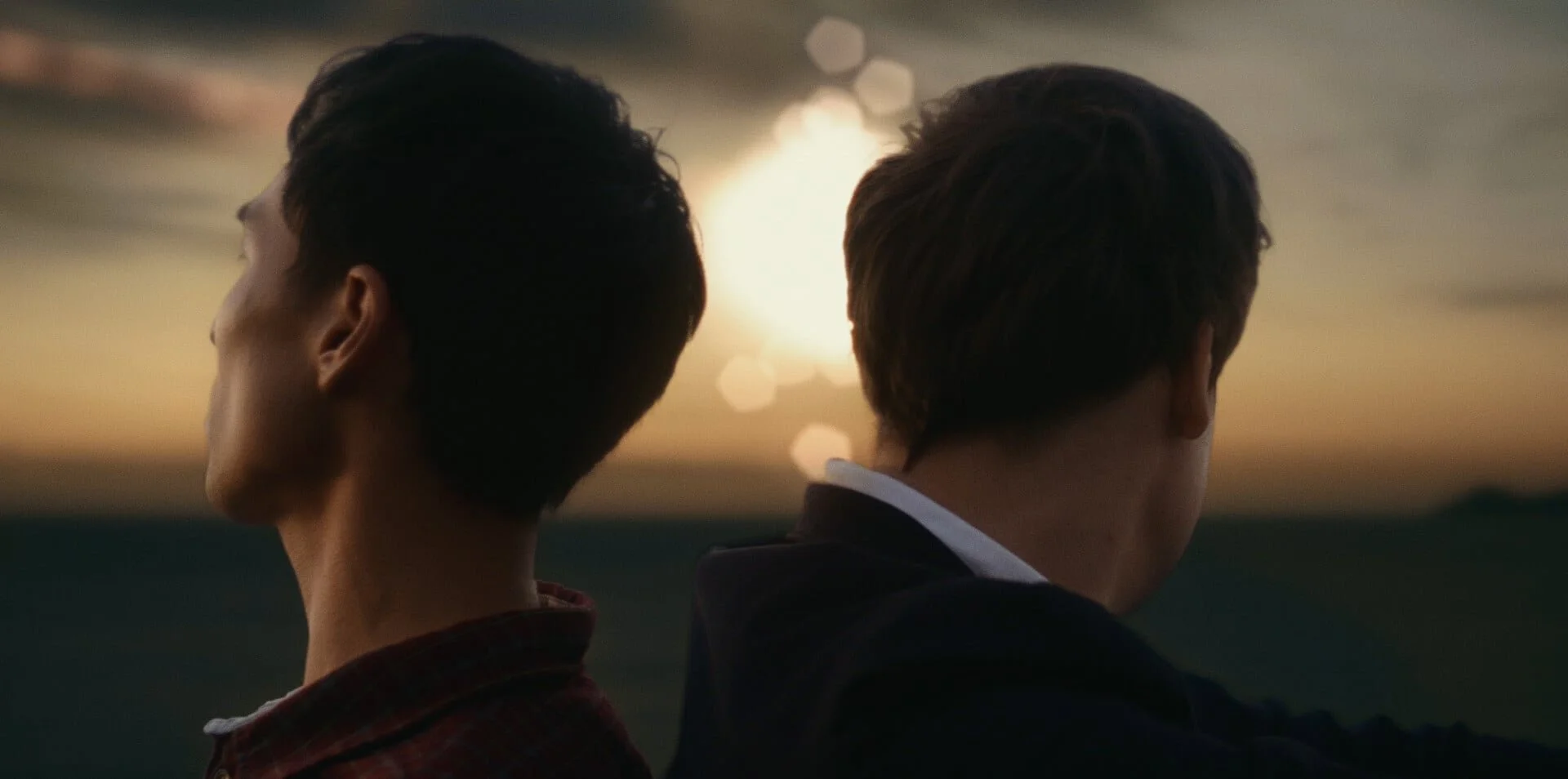
Strangers (Francesca Mackenzie, 2025)
When unexplained meteors crash down to earth, heralding humanity’s end, I know Francesca Mackenzie’s short film Strangers (2025) will come to mind.
It made its world premiere at MWFF 2026, featuring in the ‘Freshly Squeezed Shorts 1’ and was bittersweet in its narrative of two strangers meeting at the end of the world. Noah accepts his fate by going on a nature hike, with a last meal in his backpack, and a whiskey in hand. Interrupting his hike is Jacob, who seeking companionship in death and anxious, flees the city’s ‘last hurrah’ parties.
On a futuristic Zoom call, I met with Mackenzie who is based in Te Whanganui-a-Tara (Wellington) in Aotearoa New Zealand. We talked all things sci-fi and film, delving into her experience directing and writing her 9-minute short, Strangers.
The end of the world is a science fiction concept explored in all possibilities, from blackholes, to robot takeovers, to the explosion of the sun…it can go on depressingly! But it’s Mackenzie’s focus on what makes us human and how life’s meaning is created by death that the existential undertones of her film filter through.
“I know a lot of people find [the end of the world] really distressing, and they hate to think about that sort of thing, but for some reason, I like to think about it. I find it makes all of my problems feel a little bit less big,” she said.
Even the idea of ‘stranger danger’ is upended in this film, as Noah and Jacob become the most significant people in each other’s lives in the face of the end.
“It's a little bit about the importance or the value of transient relationships. Because we sometimes, as we should, we value these really big long-term relationships. But sometimes I think it's…people that we only see occasionally, or we only meet once in a circumstance of our life. They can also be really important to our life.”
The film studies how quantity of time and depth of connection don’t always go hand in hand. There is a natural familiarity between Noah and Jacob, despite having only just met. It’s in the awkward pauses, the embarrassed expressions, and the tearful laughter between them. The back-and-forth conversation is normal and casual, just two people getting to know one another. But it’s the impending doom that makes their interactions absurd and poignant. It’s reflective of the human condition and how we all try to find connection no matter how dire things are.
The naturality between Noah and Jacob may also come from the actors being friends, as Mackenzie shared how the small crew of four people including herself was composed of her two friends and husband.
“This crew, there were four of us, including me. It was next level tiny. And I think what that does is it means that you can practice and experiment without feeling observed or judged, which can sometimes be intimidating when you have thirty crew members.”
There is also the privacy and seclusion of the park. It takes away the pressure of performing, especially between friends who know one another outside of the professional space.
For Mackenzie, setting the film in nature was not only budget friendly, but also served the tragic element of the film.
“I think it was about creating some contrast with this horrific thing that was happening…I wanted for people to think about what was going to be lost.”
That’s exactly the effect it had as I watched her film. Each time a bird twittered, or the sunlight passed through the trees in a mesmerising way, I hoped that the inevitable destruction of earth wouldn’t happen, or Mackenzie would say ‘Plot twist! The world was saved!’.
Becoming a film director wasn’t the straightforward career path for Mackenzie.
She studied Fine Arts, went to design school, and worked as a professional illustrator. It was in her early twenties that she got increasingly obsessed with films, and at 25 decided to go to film school.
“It was a little bit later, which I think has its advantages because it means you can kind of come into it a little bit more sure of yourself as an older person,” she said.
Her advice to emerging filmmakers is keeping in mind the time (and budget!) cost of visual effects.
“If you're going to do an end of the world film with no budget, I would highly recommend not doing what I did and getting a bunch of really wide shots of amazing landscapes. Because when you get to post-production, someone is going to have to fill that with visual effects, which is why it's taken me two years since I filmed it to finish the film.”
A big milestone in her career is going from shorts to full length films. Mackenzie is now working on two feature horror films – one folk and one psychological.
I was thrilled to find out, as genre films are always in need for original and new stories.
Conversation with Mackenzie was uplifting and philosophical, and to end on a bittersweet note as her film did, I asked how she would spend her last day on earth.
She found that in her characters there was a part of herself, especially in how they would each spend their final moments.
“I probably would go out. I don't think I'd want to be around a lot of people. I think that would be a bit overwhelming, to be honest. Especially the idea of being surrounded by people that you really love. It just feels quite intense.”
Mackenzie would also love to go off into nature, as Noah and Jacob did. She would also bring a smorgasbord of sandwiches. Her comment reminded me of one of the details I adored most in the film. It was the choice of a Marmite and chip sandwich, a combination I’ve never heard of before, and it at once felt personal and individual to Noah who brought it.
There’s a wonderful moment where Noah and Jacob share the sandwich, and though it’s melancholy, it’s this simple breaking of bread that gives the film its human essence.