
Sweetie: Jane Campion's quiet theatre of horror
By Gisele Bruce
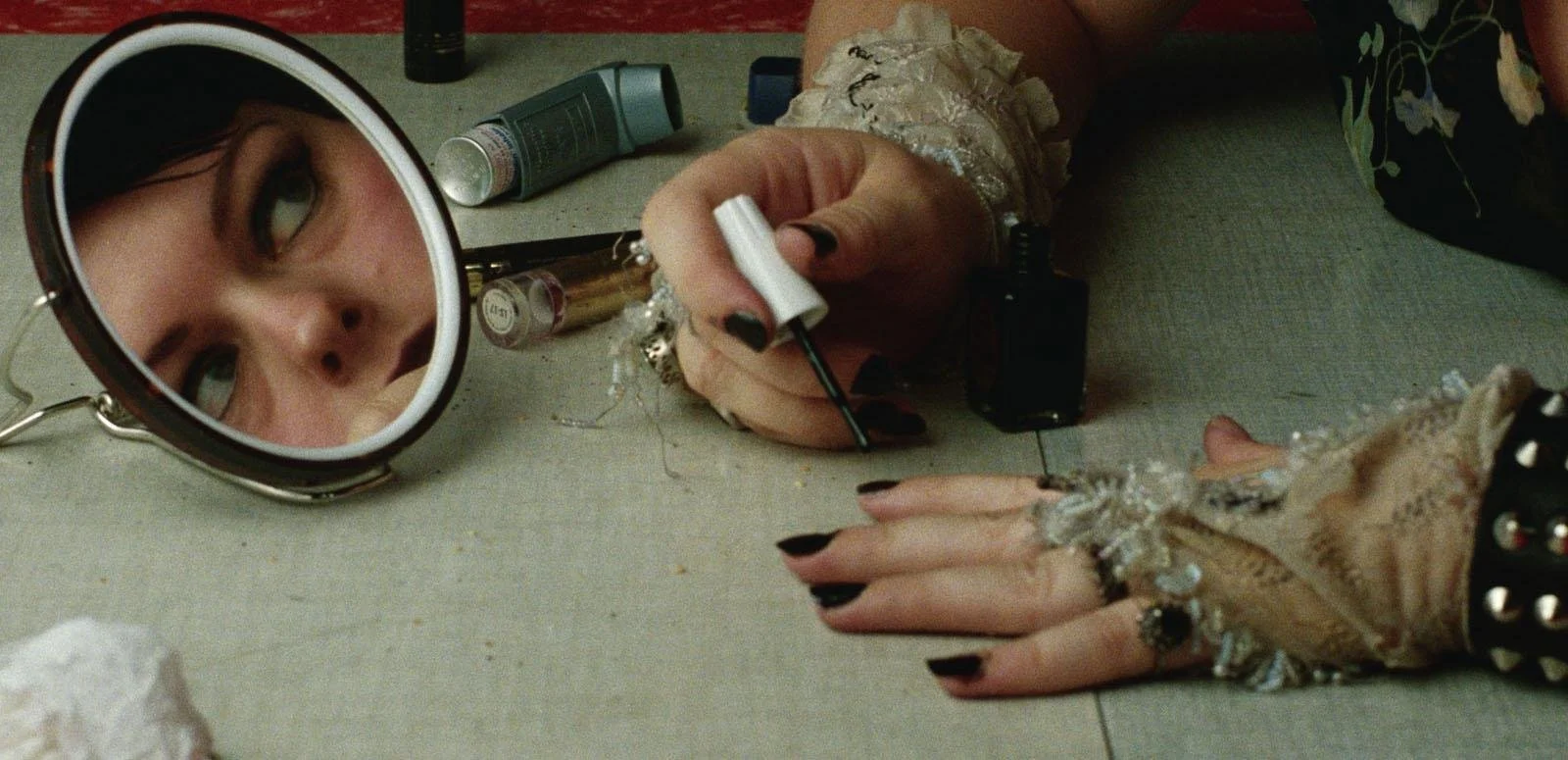
Sweetie (Jane Campion, 1989)
From bold debut to acclaimed classic, Jane Campion’s first feature laughs at family violence while resisting the urge to spoon-feed us. Starring Karen Colston and Geneviève Lemon, this work is often described as a piercing commentary on mental illness and its effects on the family. A closer look reveals something far more unsettling. The story of sisters Kay and Dawn is a study of the social rituals, hierarchies and inherited myths that sustain the very conditions that shame us.
The script quietly dismantles a misogynistic premise that historically recurs in cinema: relationships fall apart because of women who are “not normal”. It signals how the disruptive and the downtrodden are shaped by the very systems meant to control them. “This is a family business and it will be handled by the family,” the father declares in a harrowing scene. When Kay has finally convinced her mother to call for help, yet another obstacle lands like a brick.
The story is guided by performances that initially register as whimsical or absurdist. As everything gradually curdles, we are forced to acknowledge how children's suffering is dismissed within patriarchal structures. Clayton, played by Andre Pataczek, isn't just a charming neighbour boy. He serves as a witness to the adults' dysfunction. Through Sweetie’s earliest experiences we access Campion's worldview, where humour is not relief but curiosity. Whether intentional or not, the filmmaker’s wit then becomes strategic. We remain amused and delighted throughout, while she interrogates the shaming of women and the normalisation of abuse.
In this context, the production aligns with critiques of domestic life that remove pathology from the individual. However, it's up to us, to place it where it belongs—within the frameworks that govern intimacy. We see Kay staying in a prescripted relationship and possibly seeing this as self-agency. We see the mother welcoming back her questionable partner. Then everyone comes together to get rid of Sweetie's boyfriend, not because he is a bad influence, but because it allows them to more easily manipulate Sweetie.
As if foretelling An Angel at My Table (1990) and the Oscar, Cannes and BAFTA-awarded The Piano (1993), Sweetie (1989) divided early audiences. Almost forty years after its release, Campion’s genius is still scandalous. It tears us apart. It strips us bare and implicates us through the mere act of watching. Her theatrical compositions suggest that love might be conditional, coded and (purposely) misinterpreted. That family is too often idealised as the primary site of care. There is no way to distance oneself from what is on the screen and no way to undo what it does to us.
This might explain why Sweetie, one of the most entertaining pieces in the history of cinema, hasn’t (yet) abolished the dominant gaze: women, they're just not funny, they belong in the refrigerator.
Sweetie’s 4K digital restoration screened on Sunday 22 March for Melbourne Women in Film Festival’s 10th anniversary, in partnership with ACMI and the National Film and Sound Archive.